Your car’s engine is a finely tuned machine—when everything’s running smoothly, you get reliable performance, good gas mileage, and peace of mind. But just like your body needs regular checkups, your engine needs routine attention to keep it healthy. That’s where an engine tune-up comes in.
At Hillside Auto Clinic in Lomita, CA, we perform comprehensive engine tune-ups that go beyond just replacing spark plugs. We dig into the heart of your vehicle to ensure it’s performing its best. But what actually happens during this process? Let’s take a look at what a modern tune-up includes, how it benefits your vehicle, and why it’s an essential part of vehicle maintenance.
Why Engine Tune-Ups Still Matter
In decades past, tune-ups were needed much more frequently. Older cars relied heavily on mechanical timing and carburetors that went out of sync easily. Today’s engines are more efficient and controlled by advanced electronics—but that doesn’t mean tune-ups are obsolete.
Modern engine tune-up processes are more about inspection, testing, and preventive care. Instead of just “tuning,” technicians look for wear, clean vital components, and ensure all systems are working together. It’s about optimizing performance, preventing breakdowns, and maintaining fuel economy.
Signs Your Car May Need a Tune-Up
Your car probably won’t shout, “Hey, I need a tune-up!”—but it will drop hints. Look out for these common signs:
- Difficulty starting the engine
- Decreased fuel efficiency
- Rough idling or engine misfires
- Hesitation during acceleration
- A noticeable drop in power
- Check Engine Light coming on
If your car is showing any of these symptoms, it’s a smart move to get it checked. A performance improvement may be as simple as a basic tune-up.
What Actually Happens During an Engine Tune-Up?
At Hillside Auto Clinic, an engine tune-up isn’t a one-size-fits-all job. Different vehicles and engine types require different attention. However, most tune-ups follow a similar multi-point checklist. Here’s a breakdown of what you can expect:
1. Spark Plug Replacement
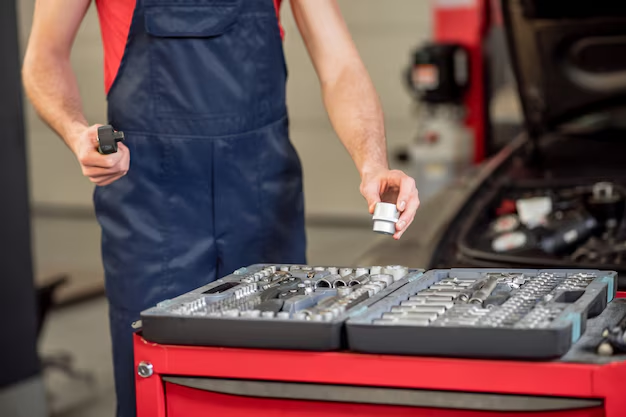
Spark plugs are small, but they play a huge role in how your engine runs. They ignite the air-fuel mixture in each cylinder, and if they’re worn out, your car’s performance suffers. During a tune-up, we’ll:
- Remove old spark plugs
- Check for carbon build-up or wear
- Install new, high-quality OEM spark plugs
Replacing spark plugs restores proper ignition and improves engine response.
2. Ignition System Check
The ignition system includes the ignition coils, wires, distributor cap (if equipped), and other components that ensure spark delivery. If one part fails, it can affect your whole engine. We test and inspect:
- Ignition timing (on older vehicles)
- Coil packs or ignition wires
- Battery and charging system
A weak ignition system can cause misfires, sluggishness, and hard starts. We ensure it’s all working properly.
3. Fuel System Cleaning
Fuel injectors spray gasoline into the engine, but over time, they can clog or become inefficient. Our technicians may recommend:
- Fuel injector cleaning
- Fuel filter replacement
- Fuel system pressure testing
A clean fuel system leads to more efficient combustion and better gas mileage.
4. Air Filter and Cabin Filter Replacement
Your engine needs clean air to breathe. If the air filter is clogged, the engine struggles to get the oxygen it needs. During a tune-up:
- We inspect and replace the air filter
- We also check the cabin air filter to keep your interior air fresh
This simple step can improve performance and fuel economy instantly.
5. PCV Valve Inspection
The Positive Crankcase Ventilation (PCV) valve helps release engine pressure and reduce harmful emissions. A clogged PCV valve can cause poor idling and oil leaks. We inspect and replace it as needed.
6. Throttle Body Cleaning
Over time, the throttle body can get dirty with carbon buildup. This affects how much air enters the engine and causes erratic idling or slow response. We clean it to restore smooth throttle performance.
7. Sensor Checks and Diagnostics
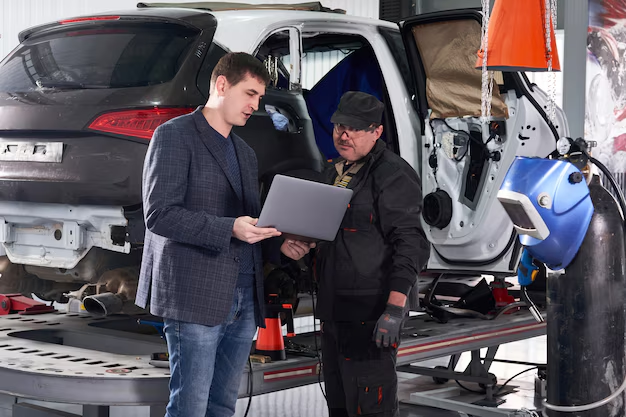
Modern engines rely on a network of sensors—from oxygen sensors to mass airflow sensors—that tell the engine computer how to manage fuel and air. If these sensors are failing, it can trigger a Check Engine Light. We use diagnostic tools to scan the system and:
- Read trouble codes
- Interpret sensor data
- Recommend any necessary repairs
This step is crucial in modern tune-ups, ensuring everything is in sync electronically.
8. Fluid Checks and Top-Offs
While not always considered part of a traditional tune-up, we go the extra mile at Hillside Auto Clinic. Our technicians inspect and top off:
- Engine oil
- Transmission fluid
- Coolant
- Brake fluid
- Power steering fluid
- Windshield washer fluid
This adds a layer of protection and keeps all systems running reliably.
9. Battery and Charging System Test
The battery is your car’s power hub. We test:
- Battery voltage and health
- Alternator output
- Starter draw
A weak battery can mimic engine problems—testing it ensures you’re not stuck with a misdiagnosis.
How Often Should You Get an Engine Tune-Up?
The frequency of tune-ups depends on your vehicle’s make, model, and age. As a rule of thumb:
- Older vehicles (with distributors and carburetors): every 15,000–30,000 miles
- Newer vehicles (with coil-on-plug ignition and fuel injection): every 60,000–100,000 miles
Always check your owner’s manual, or better yet—ask us. At Hillside Auto Clinic, we know what your specific vehicle needs and when.
The Benefits of Regular Engine Tune-Ups
Still wondering if an engine tune-up is worth the time and money? Here’s what you get when you invest in one:
- Improved fuel efficiency – a clean and balanced engine burns less gas
- Stronger performance – your car accelerates and responds better
- Longer engine life – routine care prevents bigger, costlier issues
- Fewer emissions – essential if you want to pass your next SMOG check
- Peace of mind – no strange noises, lights, or rough starts
A tune-up is a small cost compared to major engine repairs down the line.
Engine Tune-Ups and Your SMOG Check
If you’re in Lomita, you’re probably familiar with California’s strict emissions laws. Did you know a neglected engine is one of the top reasons for SMOG test failures?
A fresh tune-up ensures that your car is running clean and efficiently, reducing emissions and helping you pass your test the first time. At Hillside Auto Clinic, we’re a certified SMOG testing station, and we’re here to help you stay compliant without the stress.
Ready to Get Your Engine Back on Track?
Whether your car’s acting up or it’s just time for some routine vehicle maintenance, Hillside Auto Clinic in Lomita is your go-to destination. Our experienced auto technicians provide thorough engine tune-up services designed to restore performance, improve reliability, and keep you driving with confidence. We only use OEM factory parts, and all work is backed by our 12-month/12,000-mile warranty.
Worried about the cost? We’ve got your back with Snap Finance—a flexible, no-credit-needed payment option that lets you fix now and pay later. No more putting off important work. Just schedule your appointment, and we’ll handle the rest.
Call Hillside Auto Clinic today or book your appointment online to experience professional service, honest diagnostics, and real results. We’re proud to be Lomita’s trusted auto repair shop—and we’re here to help your car run better, longer.