If you’ve been dreading that high-pitched squeal every time you slow down for a red light on Pacific Coast Highway, you’re not alone. We’ve all been there, turning up the radio just a little louder to drown out the sound of a looming repair bill. But eventually, the vibration in the pedal or that “grinding” sensation becomes too much to ignore. When you finally pull into a shop for brake repair services, you’re immediately faced with a choice that feels like a pop quiz: “Do you want OEM parts or aftermarket?”
It sounds like technical jargon designed to make your head spin, but the truth is, this choice is the difference between a car that stops on a dime for years and one that leaves you back in the shop in six months. As your neighbor here in Lomita, I want to pull back the curtain on OEM auto parts repair versus the “budget” alternatives. Let’s look at what’s actually going onto your wheels and why your choice matters more than you might think.
The Great Brake Debate: What’s the Real Difference?
Before we dive into the “which is better” part, let’s clear up the definitions.
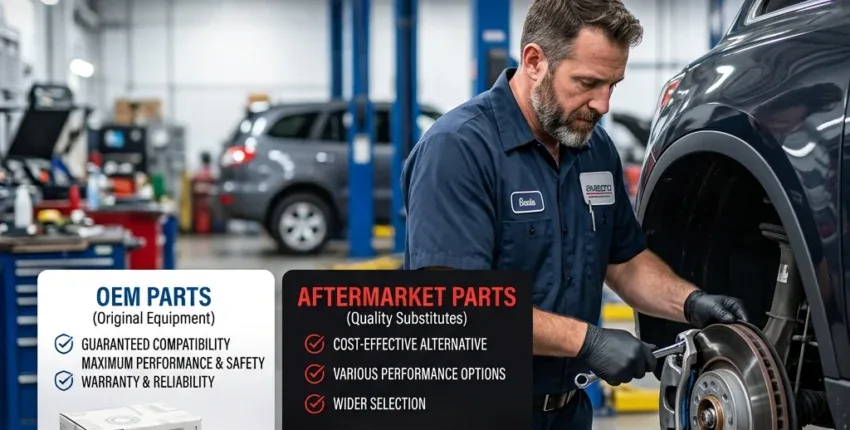
OEM (Original Equipment Manufacturer) parts are identical to the parts your car had when it rolled off the assembly line. If you drive a Toyota, these are Toyota-branded brakes. They are designed by the same engineers who built your engine and safety systems.
Aftermarket parts are made by third-party companies. Think of them like “store-brand” cereal. Sometimes they’re “close enough,” and other times, they’re a completely different recipe. While some aftermarket brands are high-quality, the market is flooded with “white-label” parts designed to be as cheap as possible, not as safe as possible.

The Danger of the “Cheap” Fix
I see it all the time: a driver chooses the lowest quote for brake repair services because, hey, a brake pad is a brake pad, right? Unfortunately, the truth is that you might be unknowingly setting yourself up for failure. Low-cost aftermarket pads are often made of harder, cheaper materials. While they might last a while, they often “chew up” your expensive rotors, leading to a much higher repair bill down the road.
The Fix: Don’t view your brakes as a place to cut corners. If a quote seems too good to be true, it’s usually because the parts are sub-par. Always ask specifically if the shop is using OEM or “economy” aftermarket parts.
Why Fitment and Engineering Are Non-Negotiable
When an engineer designs a braking system, they calculate exactly how much heat that specific car will generate and how much pressure is needed to stop its specific weight. OEM auto parts repair ensures that those calculations remain accurate.
Aftermarket manufacturers, on the other hand, often try to create one brake pad that fits ten different car models to save on manufacturing costs. This “one size fits many” approach leads to a few common headaches:
- The Infamous Squeal: If the pad doesn’t fit the caliper perfectly, it vibrates. That vibration is what you hear as a screech.
- Excessive Brake Dust: Have you noticed your front wheels turning black or gray just days after a car wash? That’s often the result of cheap aftermarket friction material wearing away inconsistently.
- Spongy Pedal Feel: If the materials don’t match the manufacturer’s specs, you might find yourself having to press the pedal much further down to get a response.
The Big Picture: Safety vs. Savings
Let’s talk about the “why” behind the price tag. Yes, OEM parts usually cost more upfront: sometimes $50 to $150 more per axle. But here’s where many drivers will see real relief: longevity and safety.
Quality OEM brakes are designed to handle “brake fade.” This happens when your brakes get hot (like when you’re driving down a steep hill or stop-and-go traffic in LA) and lose their stopping power. Cheap aftermarket parts are notorious for overheating quickly, which can lead to terrifying moments where the car doesn’t slow down as fast as it should.
The Fix: Think of the extra cost of OEM as “safety insurance.” At Hillside Auto Clinic, we’ve made the conscious decision to use OEM parts exclusively. We live and work here in Lomita, and we wouldn’t put our own families in a car with “maybe-it-works” brakes, so we won’t do it to yours either.

How Material Science Protects Your Wallet
Brake pads aren’t just blocks of metal. They are a complex mix of ceramics, resins, and fibers.
- OEM Pads: Usually use a softer, high-quality compound that provides a smooth stop and preserves the life of your rotors.
- Budget Aftermarket: Often use “semi-metallic” blends that are very harsh. They might stop the car, but they act like sandpaper on your rotors.
You might save $40 on the pads today, but you’ll end up spending $400 on new rotors next year. That’s not a bargain; that’s a trap. Understanding these differences is a key part of ensuring your safety on the road.
The Warranty Factor: Peace of Mind in Writing
One of the biggest pitfalls of “discount” brake shops is the “tailgate warranty”: as soon as they can’t see your tailgate anymore, the warranty is over.
When you opt for OEM auto parts repair, you aren’t just buying a piece of metal; you’re buying a guarantee. Because these parts are built to last, reputable shops can stand behind them. At Hillside Auto Clinic, we provide a 12-month/12,000-mile warranty on our work. We also offer a best price guarantee, ensuring you get the highest quality parts without the “dealership markup” anxiety.
The Fix: Before you hand over your keys, ask: “What happens if these brakes start squeaking in three months?” If the answer isn’t a firm, written warranty, keep looking.

Is There Ever a Time for Aftermarket?
I want to be fair here. There are “performance” aftermarket brakes (like Brembo or Wilwood) that are actually better than OEM for racing or heavy towing. However, these are specialized parts that cost even more than OEM. For the average driver navigating Lomita traffic or heading out on a weekend trip, these are usually overkill.
The problem is the economy aftermarket parts. They are designed for one thing only: to be the cheapest option on the shelf. In the world of brake repair services, you truly get what you pay for. For more on how to maintain your vehicle’s longevity, you might want to check out our guide on factory scheduled maintenance.
What to Look for During Your Next Brake Inspection
If you aren’t sure if you need a repair yet, keep an eye (and ear) out for these warning signs:
- The Indicator Chirp: Most OEM pads have a small metal tab that “chirps” against the rotor when the pads get thin. It’s a built-in alarm clock telling you it’s time for service.
- Vibration in the Steering Wheel: This usually means your rotors are warped or have “hot spots” from uneven cooling.
- Pulling to One Side: If the car swerves slightly when you brake, one of your calipers might be sticking.
- A Change in Smell: A sharp, chemical burning smell after heavy braking is a sign of overheating.
The Hillside Auto Clinic Difference in Lomita
We know there are plenty of places to get your car fixed. But as a local business, we prioritize relationships over quick transactions. By using OEM parts exclusively, we ensure that your vehicle stays as reliable as the day you bought it. Whether you’re coming in for regular engine diagnostics or a full brake overhaul, we treat every car like it belongs to our own neighbor.

Bottom Line
While the lower price tag of aftermarket brakes can be tempting, they often lead to more noise, more dust, and faster wear on your rotors. OEM auto parts repair provides the perfect fit, the quietest performance, and the safest stopping power specifically engineered for your vehicle. By choosing quality over “cheap,” you’re actually saving money in the long run and ensuring your car remains a reliable tool for your daily life.
Tired of the squeaks and worried about your stopping distance?
Don’t leave your safety to chance with “one-size-fits-all” parts. Bring your vehicle to Hillside Auto Clinic in Lomita. We’ll perform a thorough inspection and provide high-quality brake repair services using only genuine OEM parts. Plus, with our 12-month/12,000-mile warranty and best price guarantee, you can drive away with total peace of mind.